
Investigative Op/Ed By Autumn Smith FAFO Justice
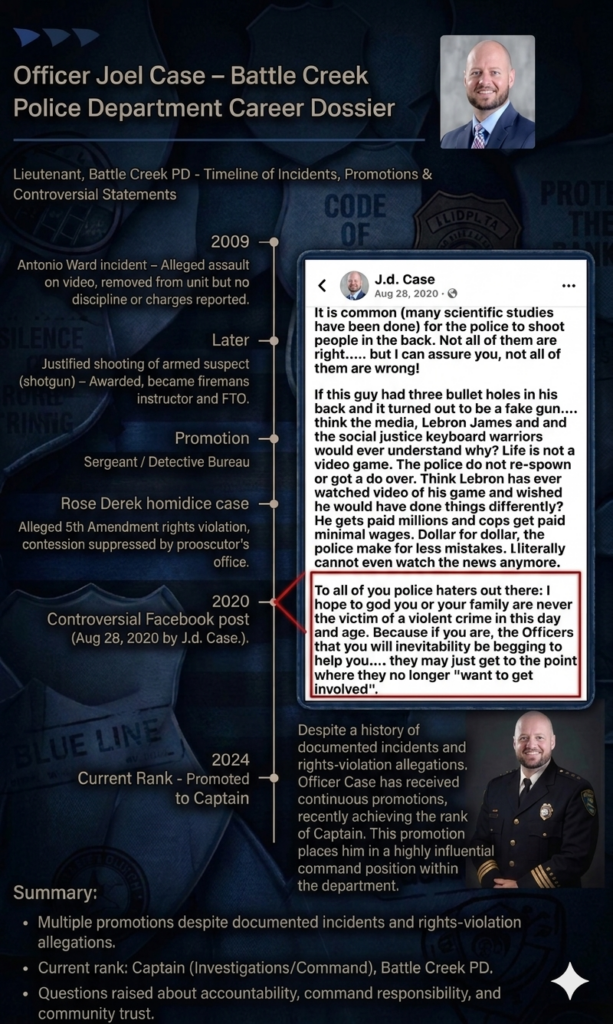
In the world of law enforcement, the “Blue Wall of Silence” is often whispered about as a barrier to justice. But in Battle Creek, Michigan, it appears to be a ladder. The career dossier of Captain Joel Case isn’t just a resume; it is a damning indictment of a system that rewards controversy with command and meets allegations of misconduct with a promotion.
How does an officer with a trail of civil rights allegations and public outbursts climb to the highest echelons of a police department? The timeline of Joel Case suggests that in Battle Creek, “accountability” is a word reserved for the public, not the precinct.
A Legacy of “Alleged” Misconduct
The dossier reveals a career punctuated by incidents that would end the tenure of a private-sector employee, yet Case has only seen his influence grow.
2009: The Antonio Ward Incident: Early in his career, Case was embroiled in an alleged assault captured on video seen HERE. While he was removed from his unit, the trail went cold—no discipline, no charges. It set a precedent: consequences are temporary; the badge is permanent.
The Rose Derek Case: Later, Case’s name was linked to a homicide investigation where the prosecutor’s office had to suppress a confession due to alleged 5th Amendment rights violations.
When the state itself has to step in to protect constitutional rights from an officer’s tactics, it is a red flag. In Battle Creek, it was apparently a signal for a promotion to Sergeant.

|
Dabble VoIP
Business phone for less |
Get Started - mention FAFO for 10% off |
The Facebook Manifesto: Contempt as a Philosophy
Perhaps the most chilling aspect of Case’s dossier is his 2020 social media presence. In a post that reads more like a threat than a public service announcement, Case didn’t just defend police shootings; he mocked the public’s desire for restraint.
“The police do not re-spawn or get a do over… the Officers that you will inevitably be begging to help you… they may just get to the point where they no longer ‘want to get involved’.” -Joel Case

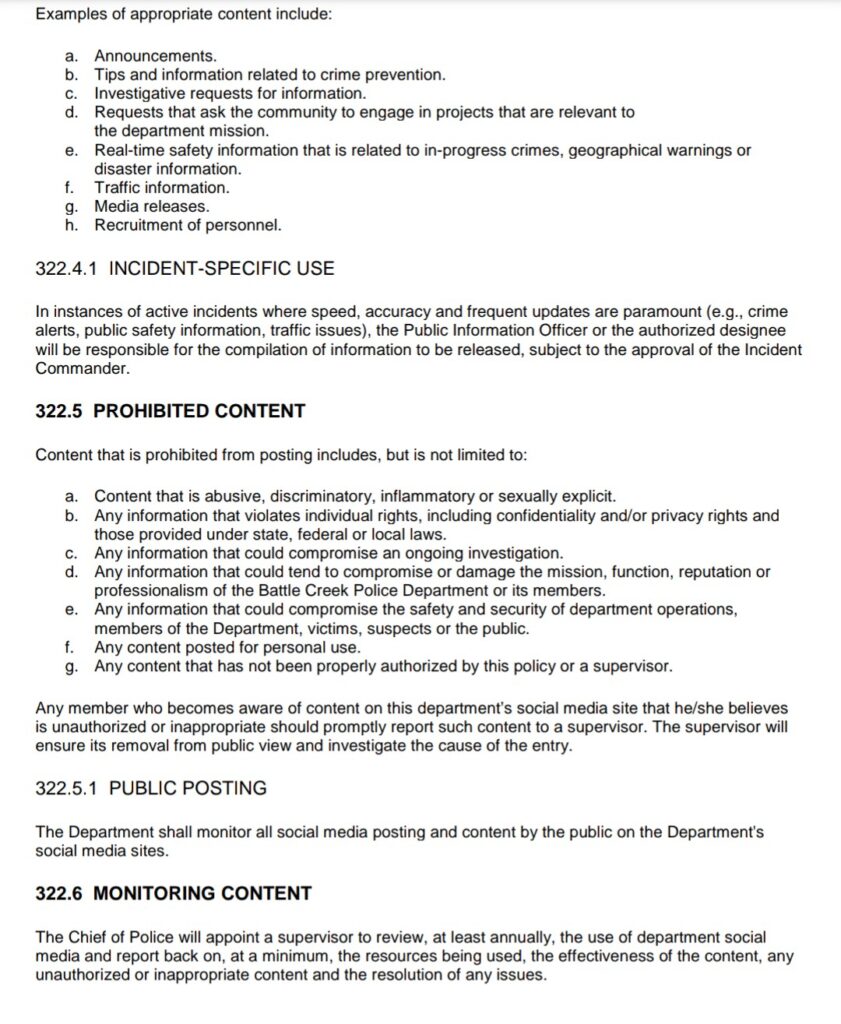
This isn’t just “unfiltered” speech. It is a high-ranking official telling the community that protection is conditional. It suggests that if you criticize the department, you might find yourself alone when you “beg for help.” For an officer to suggest that the police might “choose” not to get involved based on public sentiment is the ultimate betrayal of the sworn oath to protect and serve.
Failing Upward: The Path to Captain
Despite—or perhaps because of—this history, 2024 saw Joel Case promoted to the rank of Captain, next in line to be Deputy Chief .The promotion of Joel Case to a “highly influential command position” is a message to every citizen in Battle Creek:
The department values the status quo over community trust. When a man who suggests police may stop helping “haters” is given the power to lead investigations and command other officers, the entire department’s integrity is compromised. Battle Creek doesn’t just have a Joel Case problem; it has a systemic failure where documented incidents and rights-violation allegations are treated as mere footnotes on a fast track to leadership.
How can the public trust a department to investigate itself when the person in charge of those investigations has spent a career dodging the very accountability he is now supposed to uphold?
The GSU “Promotion Pipeline”: Accountability Deferred in the Antonio Ward Incident
The 2009 assault of Antonio Ward wasn’t just a failure of a single officer; it was a collective failure of the Gang Suppression Unit (GSU)—a unit that appears to operate under a different set of rules than the public they serve. While the video of the incident should have been a catalyst for discipline, it instead served as a launching pad for the careers of every officer involved.
https://fafojustice.com/?p=28
In the Battle Creek Police Department, failing to report a fellow officer’s misconduct isn’t a career-ender. For the members of the GSU that day, it was apparently a prerequisite for advancement.
The Silent GSU Four: Promotions Over Protocol
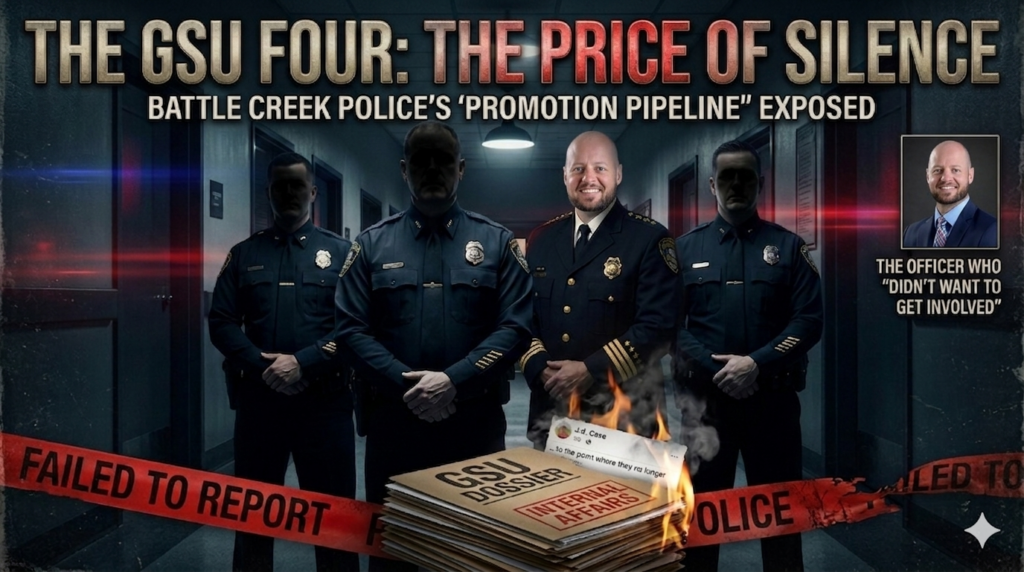
The Michigan Open Meetings Act and standard policing protocols dictate a level of transparency and internal reporting that was nowhere to be found following the Ward incident. Instead of a “duty to intervene” or a “duty to report,” the following officers adhered to a code of silence that was rewarded with higher rank and greater authority.
|
Need I.T. Support?
Express IT Solutions — Fast & Reliable. |



|
Get Support |
Officer Joel Case: Despite being the central figure in the alleged assault and being removed from the unit, he bypassed discipline entirely. Today, he sits in a high-level command position as Captain.
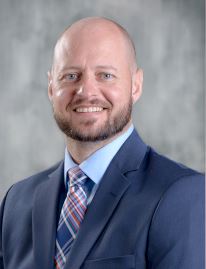
Officer Fickle: A witness to the events within the GSU. Rather than facing scrutiny for the failure to report the breach of protocol, Fickle was Promoted.


Officer Klein: Another member of the unit present during the fallout of the incident. Like his peers, Klein remained silent and was subsequently Promoted.
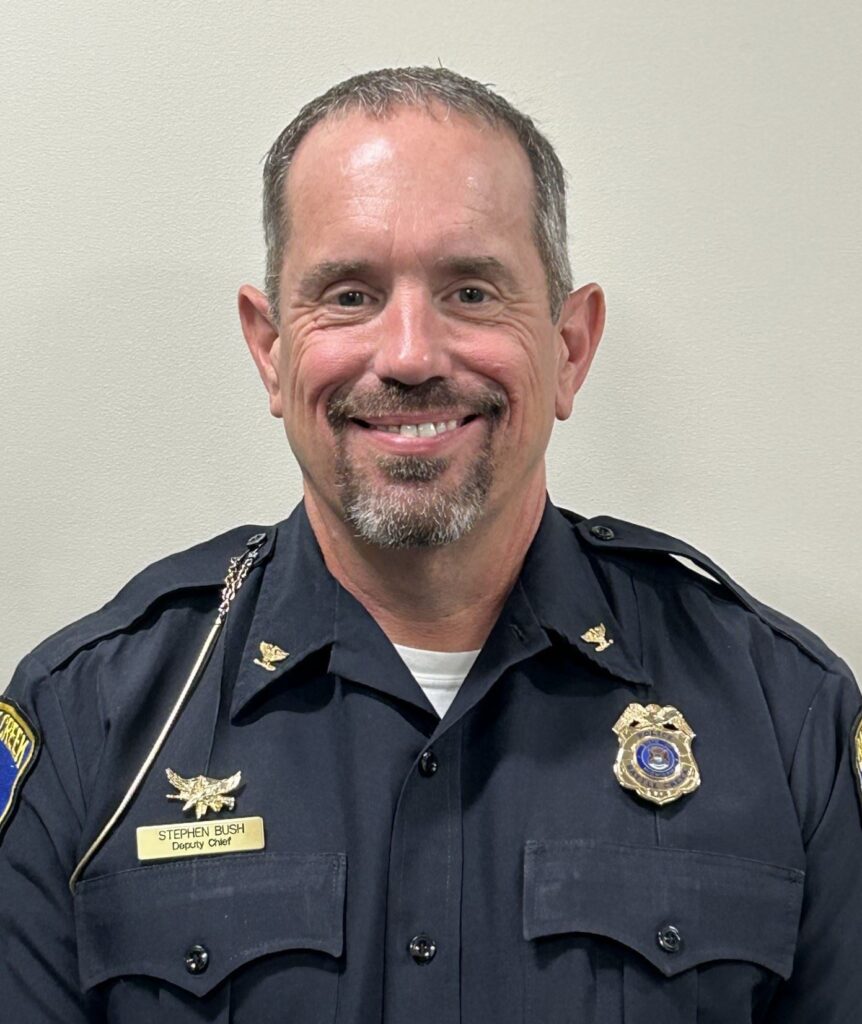
Officer Bush: Rounding out the GSU presence at the time, Bush also failed to follow internal reporting protocols regarding the use of force. His reward? He was also Promoted-to Deputy Chief. Retired in 2025, leaving the DC position open to Captains, should Shannon Bagley chose an internal candiadte.
A Culture of Protected Promotions
When an entire unit witnesses a violation of rights and not one individual follows the protocol to report it, it is no longer an “incident”—it is a culture.
The High Cost of Silence
The message sent by the Battle Creek Police Department is loud and clear: loyalty to the unit outweighs loyalty to the law. By promoting the very individuals who stood by while Antonio Ward’s rights were allegedly violated, the department has effectively institutionalized the “Blue Wall.”
These officers didn’t just “do nothing” in 2009—they have continued to do nothing in the years since to rectify the lack of accountability. Now, as they hold higher ranks, they are the ones training the next generation of Battle Creek officers. They are teaching them that in this city, silence isn’t just golden—it’s the fastest way to get a new stripe on your sleeve.