When “Everyone Knows” Corruption Exists—Until Evidence Appears
There is a pattern that repeats itself in nearly every community when police corruption is discussed. First, people casually admit what everyone already knows.
“Yeah, the department is corrupt.” “Everyone knows there’s favoritism.” “Some officers are dirty.”“There’s definitely wrongdoing going on.”
These statements are spoken openly in barber shops, online comment sections, city hall hallways, and neighborhood kitchens. Corruption is treated like common knowledge—an accepted reality no one seriously disputes. But then something changes…
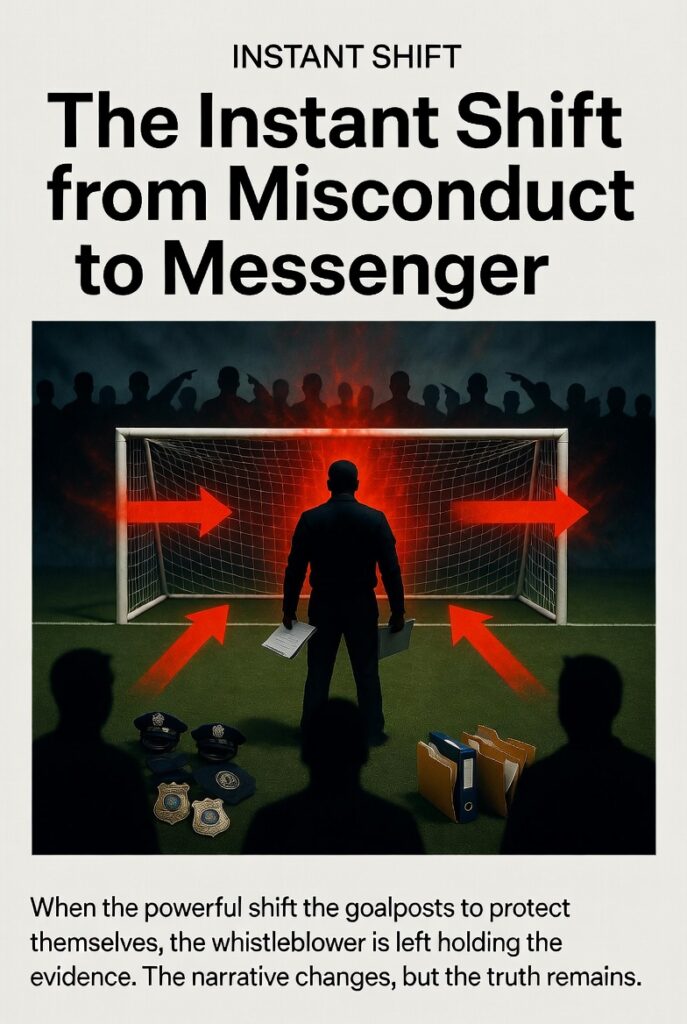
The Instant Shift from Misconduct to Messenger
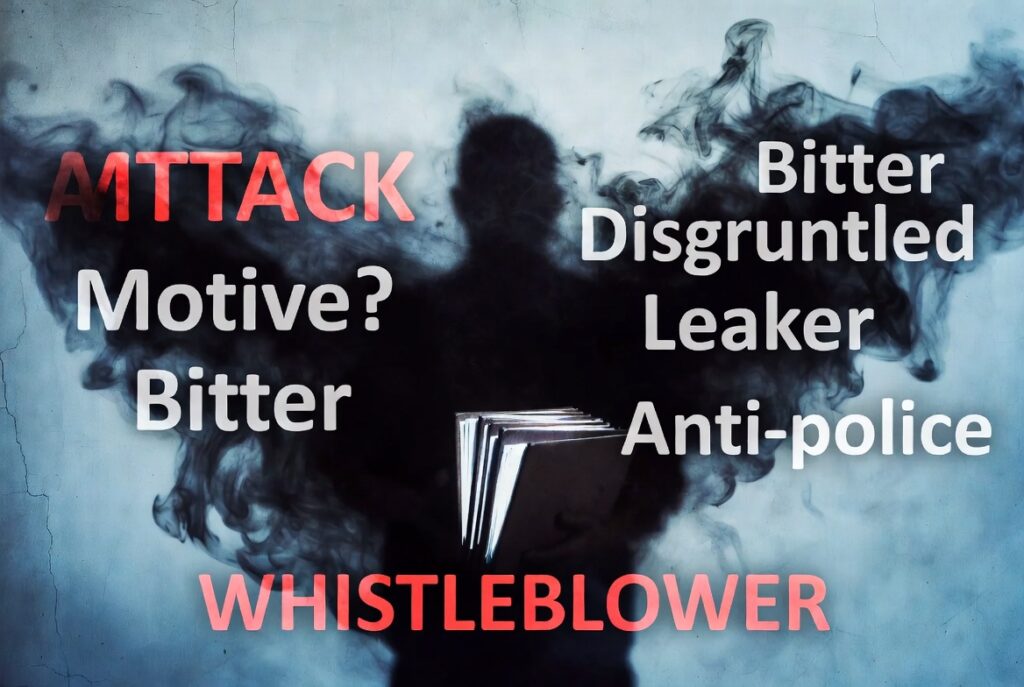
The moment a whistleblower steps forward with evidence, documentation, names, timelines, screenshots, reports, or firsthand testimony, the entire tone shifts. Suddenly the corruption everyone acknowledged moments ago becomes less important than how the truth was exposed.
Now the conversation is no longer about misconduct. It becomes about the messenger.
What was once “everyone knows it’s corrupt” becomes “well, you can’t trust that source.”
Then it becomes “yeah, but all departments have problems.”
Then “yeah, but there are bigger issues.”
Then “yeah, but exposing this hurts morale.”
Then “yeah, but maybe it was justified.”
And just like that, criminal conduct is reframed as an inconvenience, while the person exposing it is put on trial. This is one of the greatest protections corruption has: not silence, but deflection. Because many people are willing to acknowledge corruption in theory—but not confront it in practice.People support accountability until accountability names names. They support transparency until transparency reaches t heir friends. They support reform until reform threatens power.
Smear Campaigns, Motive Hunting, and Manufactured Distractions: Why Whistleblowers Fear Retaliation More Than the Wrongdoing Itself
Instead of addressing misconduct, they attack platforms, motives, personalities, delivery methods, tone, timing, politics—anything except the substance of the allegations.
This is exactly why so many honest officers, dispatchers, civilian staff, and witnesses stay quiet.
“90% of the department wants you outtas here because you broke the code”
They know what happens to people who speak up:
Retaliation.
Isolation.
Career sabotage.
Smear campaigns.
Character assassination.
Being labeled bitter, unstable, anti-police, disgruntled, or dangerous.
The message gets buried beneath attacks on the messenger.
Another tired accusation is the assumption that whistleblowers “never used the chain of command.”
What makes anyone think they didn’t? In many cases, by the time information reaches the media, watchdog groups, or the public, internal channels have already been exhausted. Complaints were made quietly. Supervisors were informed. Reports were filed. Warnings were ignored. Retaliation began.
The reality is that when corruption is embedded deeply enough, the chain of command often becomes part of the problem itself—broken, compromised, and dedicated more to protecting the institution than correcting wrongdoing. When every rung of the ladder leads back to the same wall of silence, going public is not the first option—it is the last one.
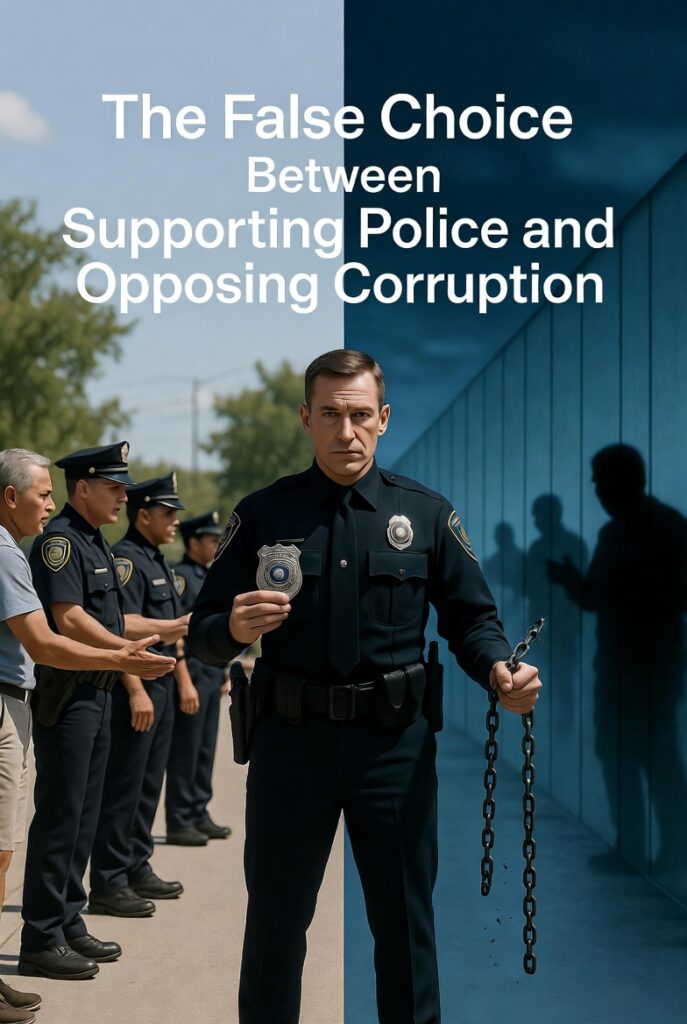
The False Choice Between Supporting Police and Opposing Corruption
And perhaps the most frustrating part is this false binary people create: that if you expose police corruption, you must hate police. That is nonsense.
Some of the strongest critics of corruption are people who deeply respect law enforcement and believe the badge should mean something. They are not anti-cop. They are anti-corruption. They want ethical officers protected, not forced to work beside criminals with qualified immunity and union cover.
Need I.T. Support? Express IT Solutions — Fast & Reliable.
Why is genuine altruism so hard for some people to believe when it comes to exposing police misconduct?
Maybe because admitting someone is acting out of principle forces others to confront why they stayed silent out of convenience.
Frank Serpico’s Warning Still Matters Today
Frank Serpico understood this decades ago. He paid dearly for telling the truth about corruption inside the New York City Police Department. And years later, his warning he personally told me still resonates:
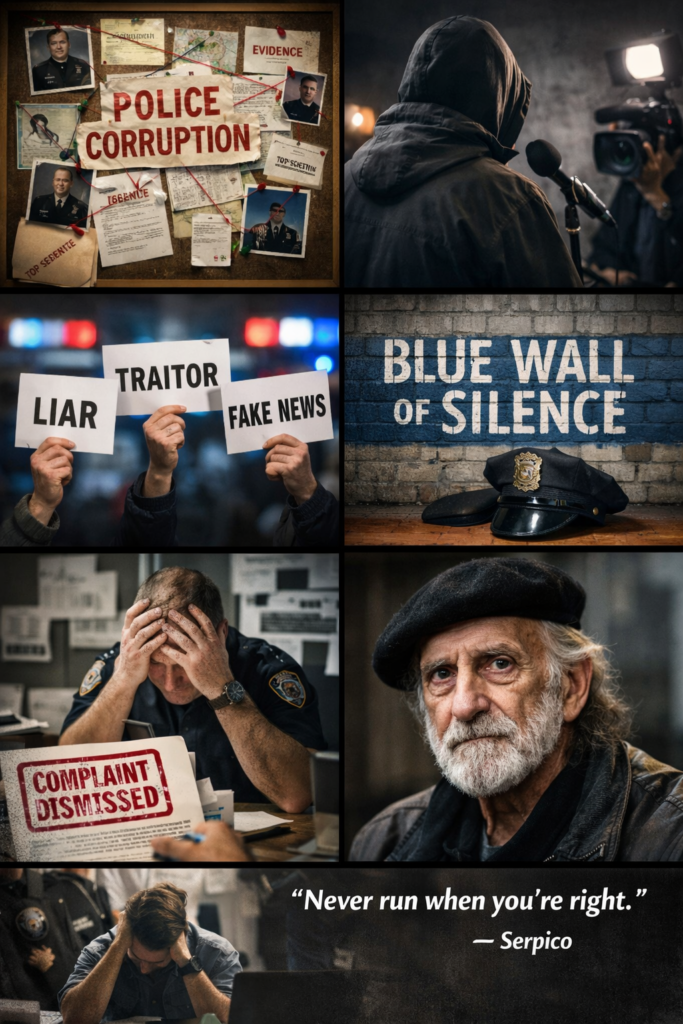
“They haven’t changed much since my day. The Blue Wall of Silence is still alive and well. Now they have more sophisticated tools to try to get away with it. But the mindset is still the same.”
Technology changed. PR strategies changed. Spin changed. But the instinct to protect power at the expense of truth remains familiar.
Serpico also offered a line every whistleblower should remember:
“Never run when you’re right.” ~Frank Serpico
Because when the goalposts keep moving, standing firm may be the only honest ground left.
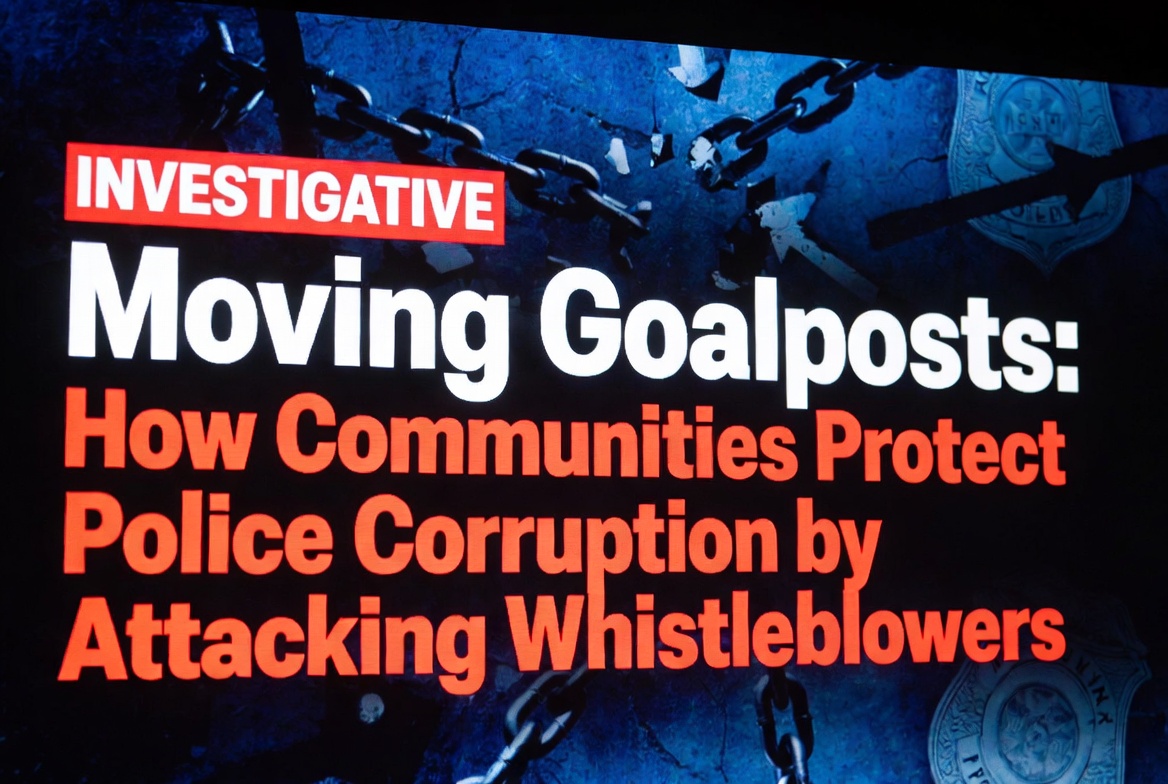
One thought on “Moving Goalposts: How Communities Protect Police Corruption by Attacking Whistleblowers”
This article hits home, especially the part about how the “proper channels” often become a wall of silence. It’s a recurring theme: as soon as someone demands transparency, the focus shifts to their motives. Since you mentioned that modern institutions now use more sophisticated tools to manage their image and data, I’ve been looking into how auditing actually works in high-stakes industries where transparency is legally mandated. For instance, I came across this detailed breakdown of corporate ownership and regulatory compliance for a major operator at https://guiadebetwaycolumbia.com/ — do you think these kinds of third-party digital audits and public reporting standards could actually be adapted to provide the same level of oversight for police departments, or will institutional power always find a way to bypass technical accountability?






This article hits home, especially the part about how the “proper channels” often become a wall of silence. It’s a recurring theme: as soon as someone demands transparency, the focus shifts to their motives. Since you mentioned that modern institutions now use more sophisticated tools to manage their image and data, I’ve been looking into how auditing actually works in high-stakes industries where transparency is legally mandated. For instance, I came across this detailed breakdown of corporate ownership and regulatory compliance for a major operator at https://guiadebetwaycolumbia.com/ — do you think these kinds of third-party digital audits and public reporting standards could actually be adapted to provide the same level of oversight for police departments, or will institutional power always find a way to bypass technical accountability?