
By FAFO Justice Editorial Staff
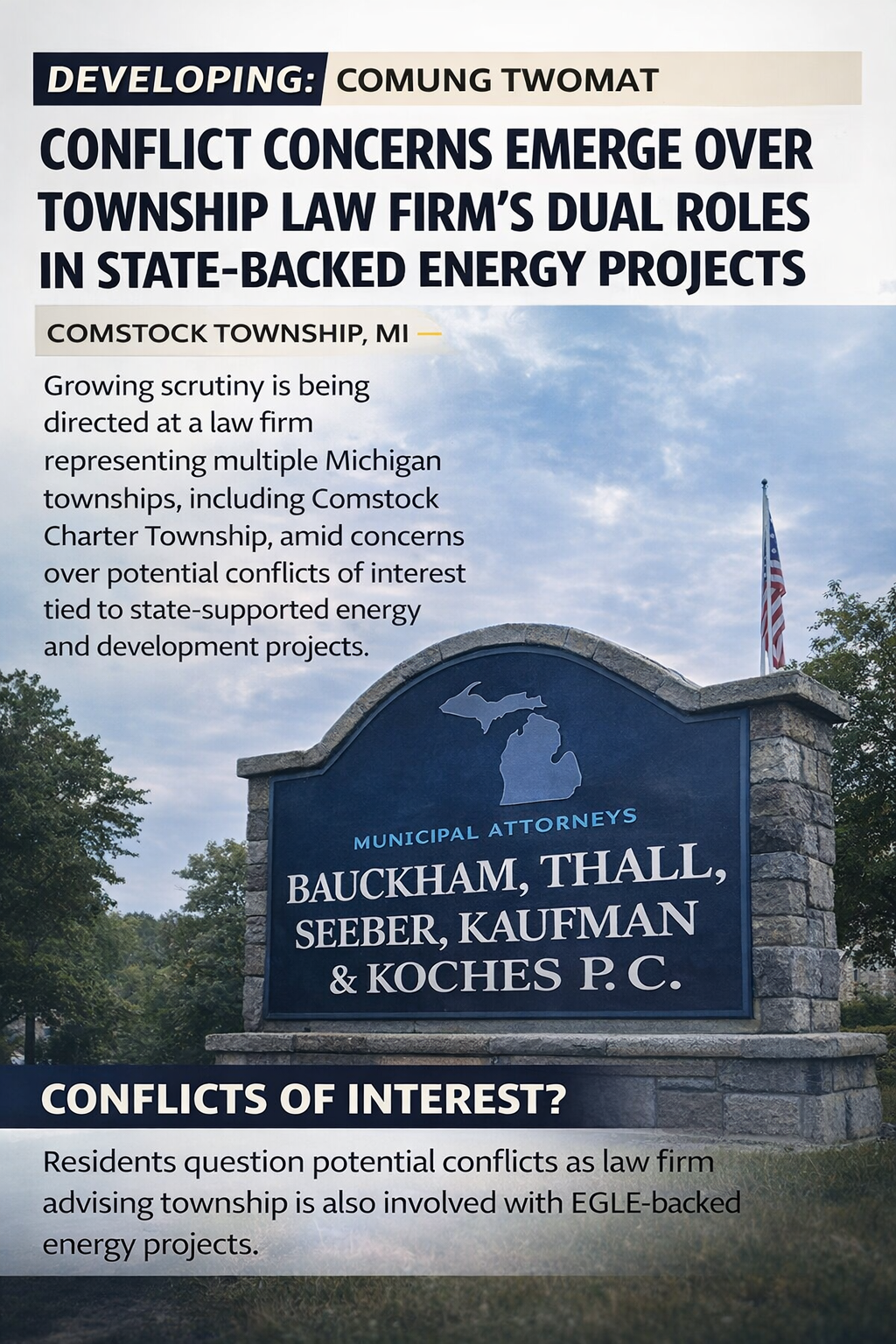
COMSTOCK TOWNSHIP, MI — Growing scrutiny is being directed at a law firm, Bauckham, Thall, Seeber, Kaufman & Koches P.C. representing multiple Michigan townships, including Comstock Charter Township, amid concerns over potential conflicts of interest tied to state-supported energy and development projects.
At issue is the firm’s reported involvement not only as legal counsel for local municipalities, but also in capacities connected to Michigan’s Department of Environment, Great Lakes, and Energy (EGLE)—the same agency playing a central role in advancing large-scale projects such as Battery Energy Storage Systems (BESS), solar arrays, electric vehicle infrastructure, and data centers across the state.
Residents and watchdog groups are raising a fundamental question: Can a law firm provide independent legal guidance to a township while maintaining financial or professional ties to systems that benefit from project approvals?
Dual Roles Raise Red Flags
Township attorneys are expected to serve as neutral legal advisors, guiding elected officials through zoning, land use, and regulatory decisions. However, critics argue that any financial connection—direct or indirect—to EGLE-related consulting or project pipelines could compromise that neutrality.
“If the same firm advising a township stands to benefit from projects being approved, that creates a structural conflict,” one local observer noted. “At minimum, it undermines public confidence in the process.”
The concern is not necessarily that laws are being broken, but that incentives may be misaligned—potentially influencing how legal risks, environmental concerns, and citizen objections are presented to decision-makers.

|
Dabble VoIP
Business phone for less |
Get Started - mention FAFO for 10% off |
Impact on BESS and Energy Project Approvals
The controversy comes as townships across Michigan face increasing pressure to review and approve complex energy infrastructure projects.
Battery Energy Storage Systems (BESS) in particular have become a flashpoint due to:
Safety concerns, including fire risks
Proximity to residential areas
Limited local expertise in evaluating technical impacts
In these situations, township boards often rely heavily on legal counsel to interpret regulatory frameworks and guide approvals.
“If that guidance is even subtly biased, it can shape the entire outcome,” said a resident following multiple proposals statewide.
Legal and Ethical Implications
Legal experts note that even the appearance of a conflict of interest can have serious consequences.
Potential risks include:
Challenges to zoning approvals or permits
|
Need I.T. Support?
Express IT Solutions — Fast & Reliable. |



|
Get Support |
Allegations of due process violations
Claims that decisions were influenced by compromised legal advice
Increased exposure to costly litigation
Under professional conduct rules, attorneys are generally required to:
Avoid conflicts of interest
Disclose any potential conflicts to their clients
Obtain informed consent when conflicts exist
Failure to do so can lead to ethics complaints or further legal scrutiny.
Concerns of “Regulatory Capture”
Beyond individual projects, some critics argue the situation reflects a broader systemic issue often referred to as regulatory capture—where government agencies, consultants, and legal actors become closely aligned with the industries they regulate.
In this model:
1. State agencies promote or fund development projects
2. Consultants and firms assist in navigating approvals
3. The same or related entities advise local governments reviewing those projects
The result, critics argue, is a cycle where approvals become more likely, and opposition faces an uphill battle.
Calls for Transparency
Residents in affected communities, including those in Comstock Township, are increasingly calling for:
Full disclosure of any financial relationships between municipal law firms and state agencies
Independent legal review of major project proposals
Greater transparency in how decisions are made
What Comes Next
As more projects move forward under Michigan’s evolving energy and infrastructure policies, the role of legal counsel in local decision-making is expected to face continued examination.
Whether these concerns lead to formal investigations, policy changes, or legal challenges remains to be seen—but one thing is clear: public trust in the process is now part of the story.
The attorneys are controlling government – their biggest job is to control the political theater and maintain the illusion of a “government by, of, and for the people.