
EXCLUSIVE INVESTIGATION
By FAFO Editorial Staff
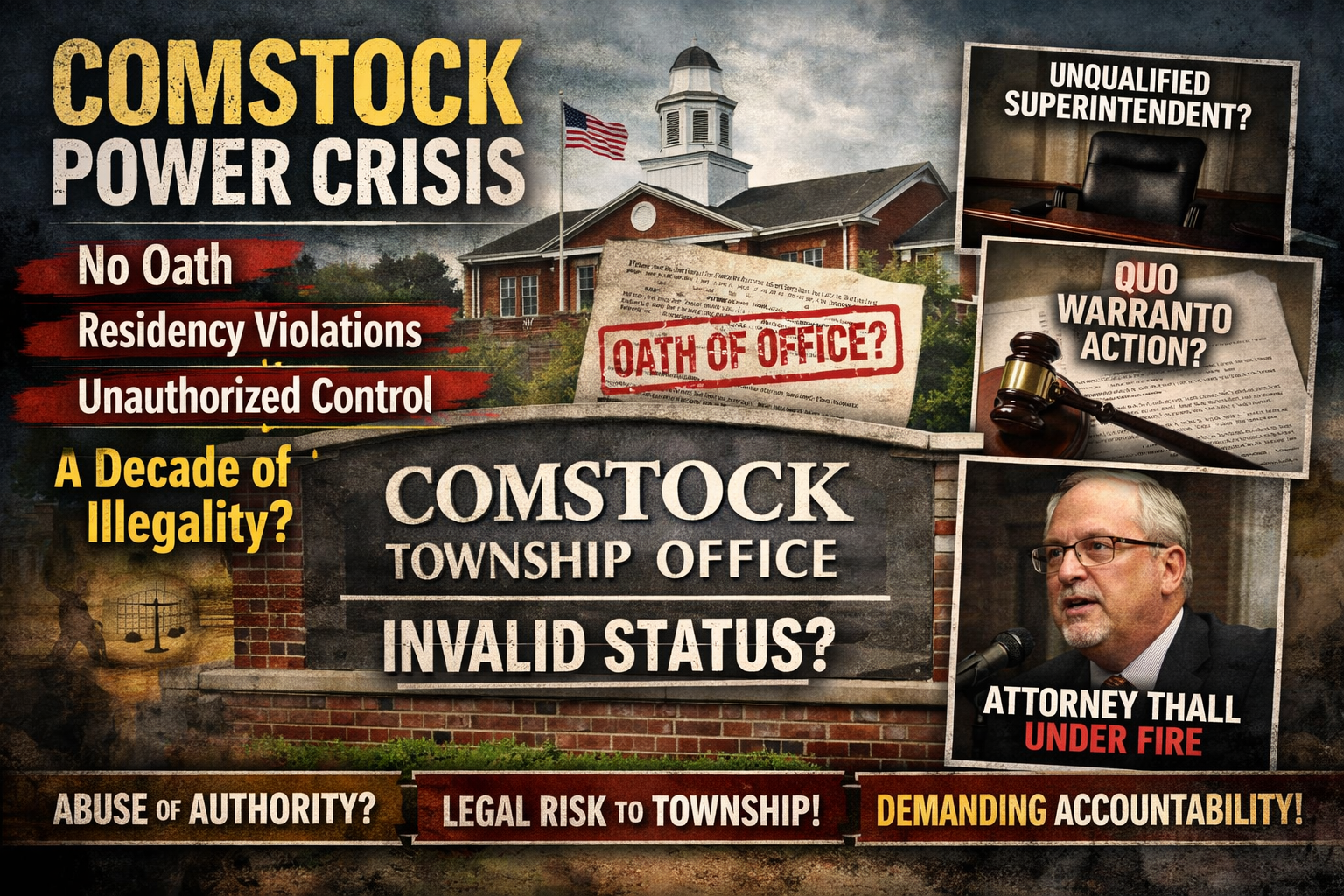
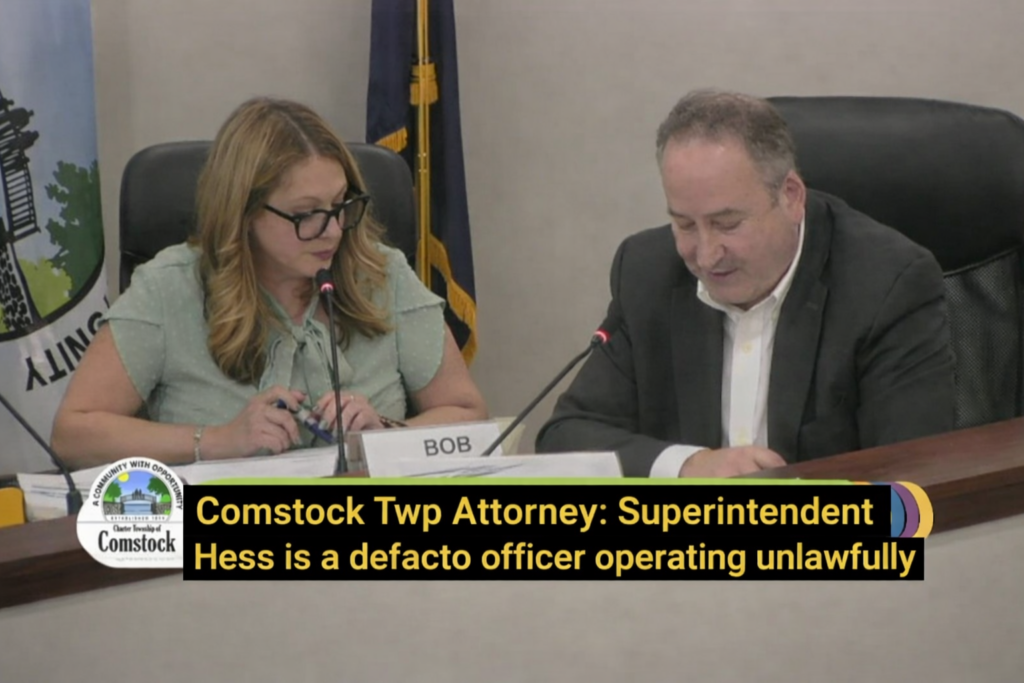
COMSTOCK TOWNSHIP, MI — What’s unfolding inside Comstock Township is not a minor clerical oversight. It is a structural failure of lawful authority that raises serious questions about whether a key government actor has been operating outside the bounds of Michigan law for years—while those responsible to stop it allegedly looked the other way.
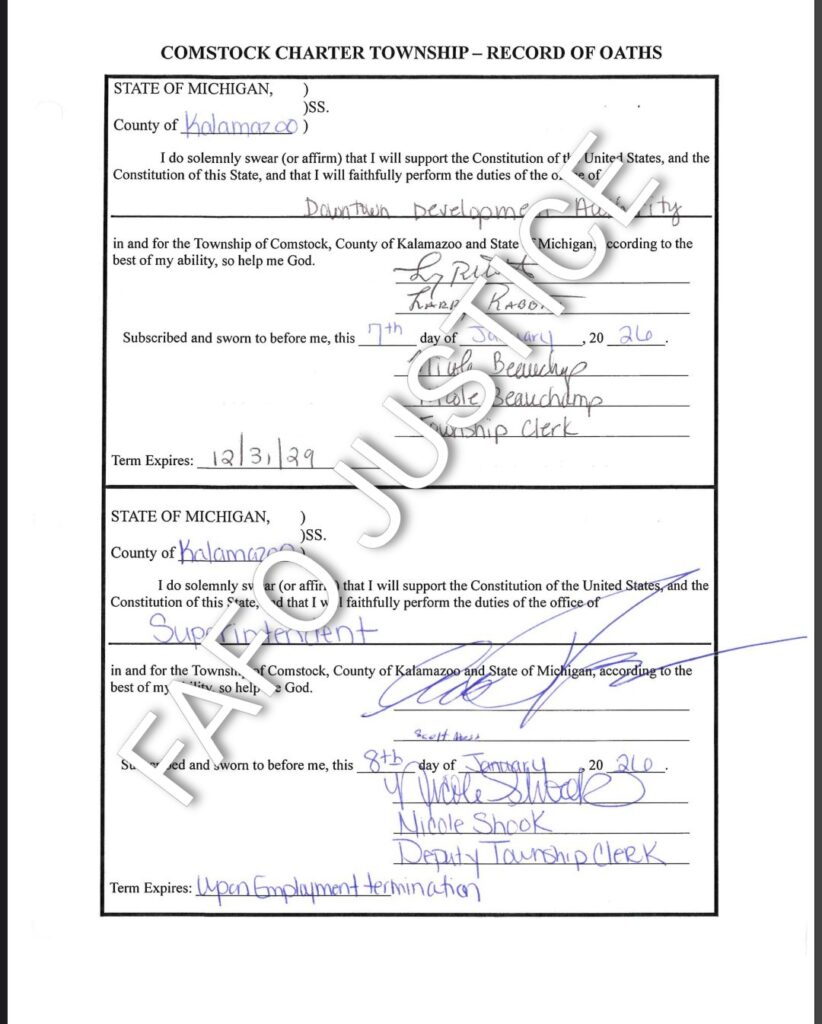
At the center: No properly executed or filed oath of office for Superintendent Scott Hess. Questions surrounding residency eligibility, a transfer of sovereign authority away from elected officials, and township attorney Robert Thall, of Buckham, Thall, Seeber, Kaufman, & Koches P.C.-Michigan Township Law-MTA now accused of minimizing the issue while attempting a quiet, after-the-fact fix. This is not procedural. This is constitutional.
The Oath: The Legal Trigger for Government Power
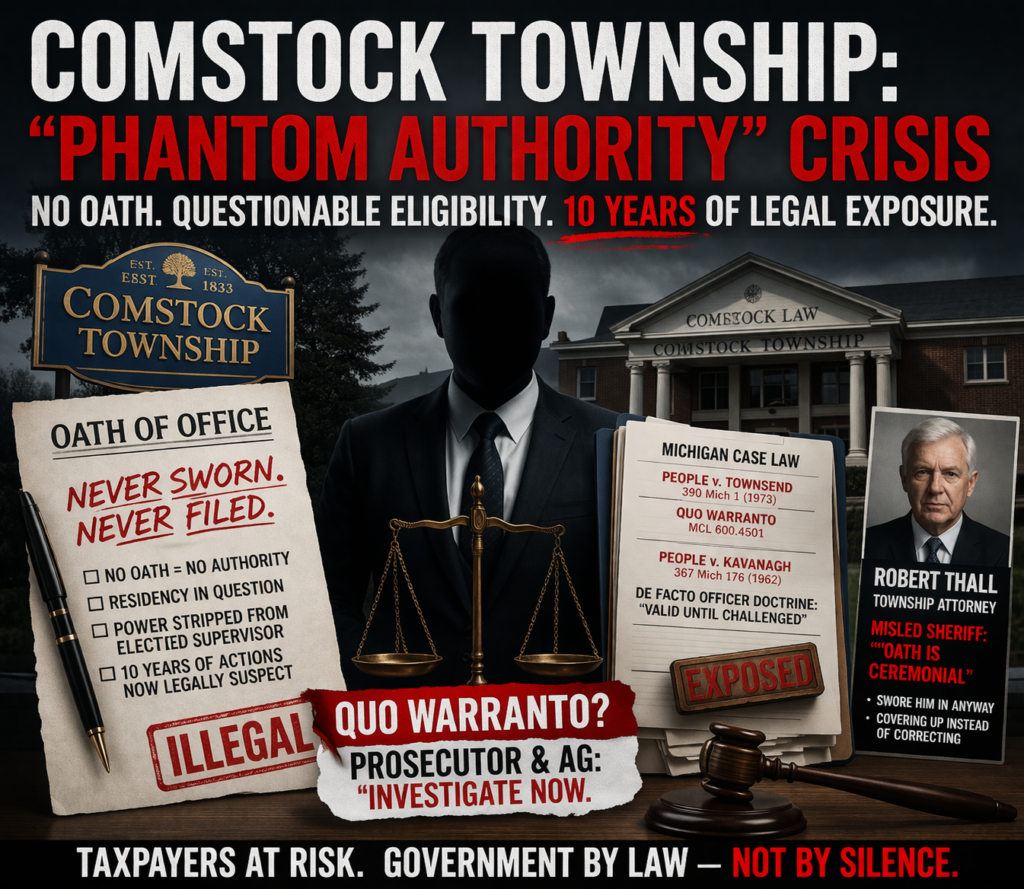
Michigan’s Constitution requires public officers to take and subscribe to an oath before exercising authority. That oath is not ceremonial—it is the legal act that activates the office itself. Attorney General opinions are explicit: failure to take and file the oath can create a vacancy in office by operation of law. In plain terms: No oath = no lawful authority.
That means every action taken without it is immediately suspect—not politically, but legally.
The “De Facto Officer” Shield — And Its Limits

|
Dabble VoIP
Business phone for less |
Get Started - mention FAFO for 10% off |
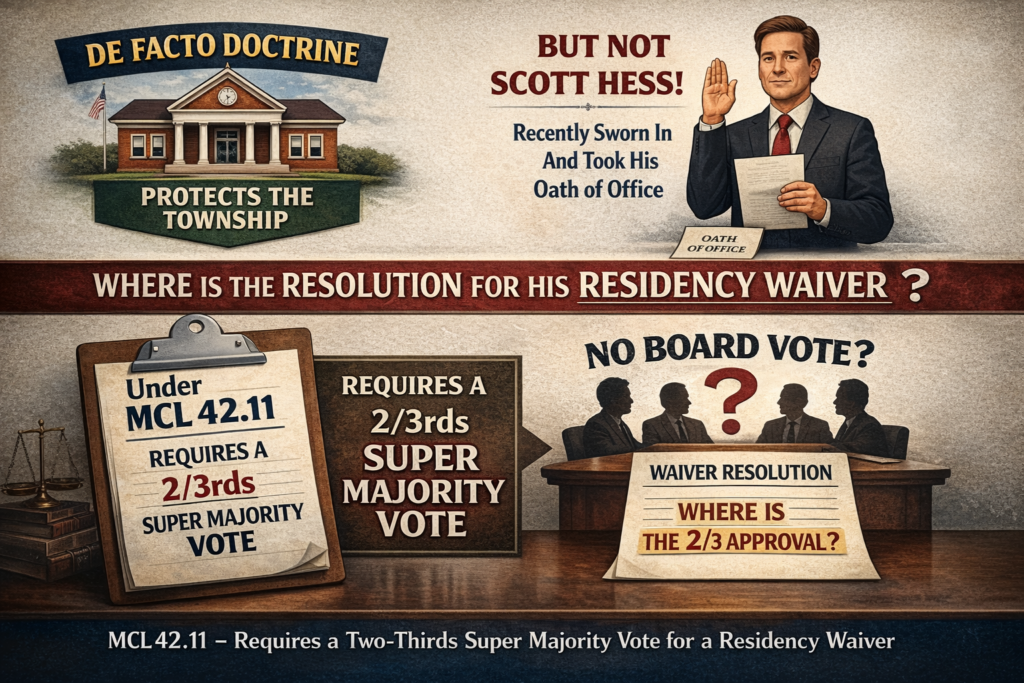
Expect defenders of the status quo to lean heavily on the de facto officer doctrine. Michigan courts have long recognized it, including in People v. Townsend and reaffirmed in later authorities. The doctrine essentially says, even if an official is improperly in office, their actions may still be treated as valid to protect the public. But here’s what’s being glossed over:
The doctrine exists to protect the public—not to protect officials or attorneys who knew of the defect and ignored it. It only holds until the defect is challenged in a proper legal proceeding, and crucially, it does not legitimize the person’s right to hold office.
The Michigan Supreme Court has made this clear: authority must be respected “until in some regular mode…their title is investigated and determined.”
That “regular mode” is exactly what’s now being called for.
Quo Warranto: The Legal Weapon Now in Play
Michigan law provides a direct mechanism to challenge unlawful occupation of public office: quo warranto. Under MCL 600.4501: The Attorney General is required to bring an action if warranted, if the AG refuses, a private citizen can seek leave of court to proceed. This is the statutory pathway to remove someone unlawfully exercising public power. If Superintendent Hess lacked a valid oath and/or residency qualifications, a quo warranto action could remove the Hess from authority, formally declare the office improperly held and trigger broader legal consequences for the township.
The Real Problem: Concentrated Power in the Wrong Hands
This situation would already be serious—but Comstock Township made it exponentially worse. Previous boards stripped authority from the elected supervisor and reassigned it—by motion and resolution—to an appointed superintendent. That means power was removed from a voter-accountable official and handed to an unelected administrator who may not have had lawful authority to hold that power at all.
Residency Violations: Not a Technicality
Michigan law is clear: public office can become vacant if the officeholder ceases to be a resident of the jurisdiction. If residency requirements were not met, then the appointment itself may be void and the individual may never have been eligible to serve and the township may have been operating under legally defective leadership. Combine that with the lack of an oath, and the legal exposure compounds rapidly.
The Attorney Problem: Damage Control vs. Legal Duty
Now to the most explosive allegation: FAFO Justice filed a formal complaint in January with the Kalamazoo County Sheriff’s department regarding this violation. FOIA Records prove that the “investigation” consisted of the deputy talking to township attorney Robert Thall to which attorney Thall is accused of telling law enforcement that the oath of office is merely “ceremonial”—while simultaneously attempting to administer one after the fact. That is not just contradictory. It’s potentially dangerous.
|
Need I.T. Support?
Express IT Solutions — Fast & Reliable. |



|
Get Support |
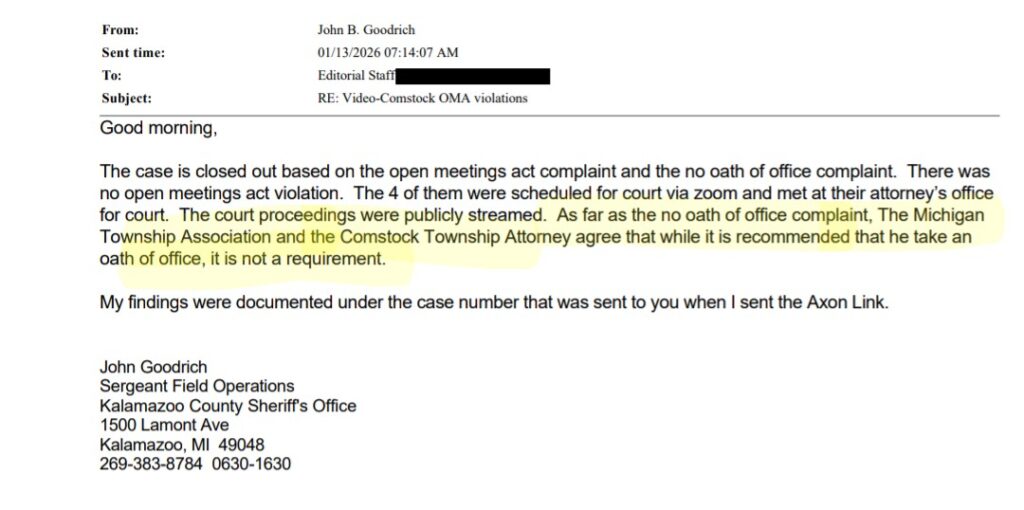
Because, The law clearly treats the oath as mandatory, not ceremonial. A late oath does nothing to cure past deficiencies, and attempting to “fix it quietly” avoids the only lawful remedy: full legal review and disclosure
This is where the role of counsel becomes critical—and questionable. A municipal attorney’s duty is not to protect optics. It is to identify legal defects immediately, advise the board of risk exposure, recommend corrective legal action, and ensure transparency to limit liability, failure to do so doesn’t reduce risk—it multiplies it.
Why a Late Oath Doesn’t Save Them
There is a misconception being pushed-“That swearing him in now fixes everything.” It doesn’t.
The de facto doctrine may shield some past actions for public stability—but it does not retroactively legalize authority, eliminate liability exposure, prevent quo warranto removal, or erase years of potential statutory violations. Even federal courts have acknowledged that the doctrine validates acts for policy reasons, not because the appointment was lawful.
The Liability Bomb Facing Comstock Township
If this issue is formally challenged, the township could face:
1. Contract Challenges: Agreements executed under questionable authority could be litigated.
2. Insurance Complications: Carriers may deny coverage if actions were taken outside lawful authority.
3. Civil Litigation: Residents or affected parties may bring claims tied to invalid governance.
4. Governmental Instability: Years of decisions could be scrutinized, reopening settled matters.
This is not about politics. It’s about lawful authority vs. unlawful exercise of power.
Comstock Township appears to be facing a scenario where, authority was centralized, legal prerequisites may have been ignored, and the issue is now being managed quietly instead of corrected properly. That is exactly how small compliance failures turn into major legal crises.
What Must Happen Next That The Attorney Is Failing To Do
If this is to be handled correctly—not cosmetically—there are only a few legitimate paths forward:
Immediate independent legal review
Full disclosure of oath and eligibility records
Consideration of quo warranto proceedings
Structural correction restoring lawful authority
Anything less risks turning a fixable problem into a long-term legal disaster.